About GCF

A research institute and a forum for climate transformations

The Global Climate Forum was founded by Nobel laureate Klaus Hasselmann. Today we are a non-profit research institute in Berlin working on the institutions and the finance that climate transformations need, and a forum that brings science, policy, business and civil society together.

Our story

In 2001, a group of European research institutes, NGOs and businesses founded the European Climate Forum. The driving force was Klaus Hasselmann, who in 2021 received the Nobel Prize in Physics for his pioneering work on climate modelling. His conviction: solving the climate problem requires bringing together people who usually do not talk to each other, and letting them exchange arguments with respect and on equal terms.

Scientific founding members, 2001
  • Potsdam Institute for Climate Impact Research, Potsdam (Carlo C. Jaeger)
  • Max Planck Institute for Meteorology, Hamburg (Klaus Hasselmann)
  • Tyndall Centre for Climate Change Research, UK (Mike Hulme)
  • Fondazione ENI Enrico Mattei, Milano (Carlo Carraro)
  • Nansen Environmental and Remote Sensing Centre, Bergen (Ola M. Johannessen)
  • Paul Scherrer Institut, ETH Zürich (Alexander Wokaun)
  • International Research Center on Environment and Development, Paris (Jean-Charles Hourcade)

As our network grew beyond Europe, with partners in the US, China, Australia and elsewhere, the members' assembly renamed the organisation Global Climate Forum in 2011. We continue this tradition: we do not aim for one single view on climate change, but for a variety of well-considered positions as a basis for sound decisions.
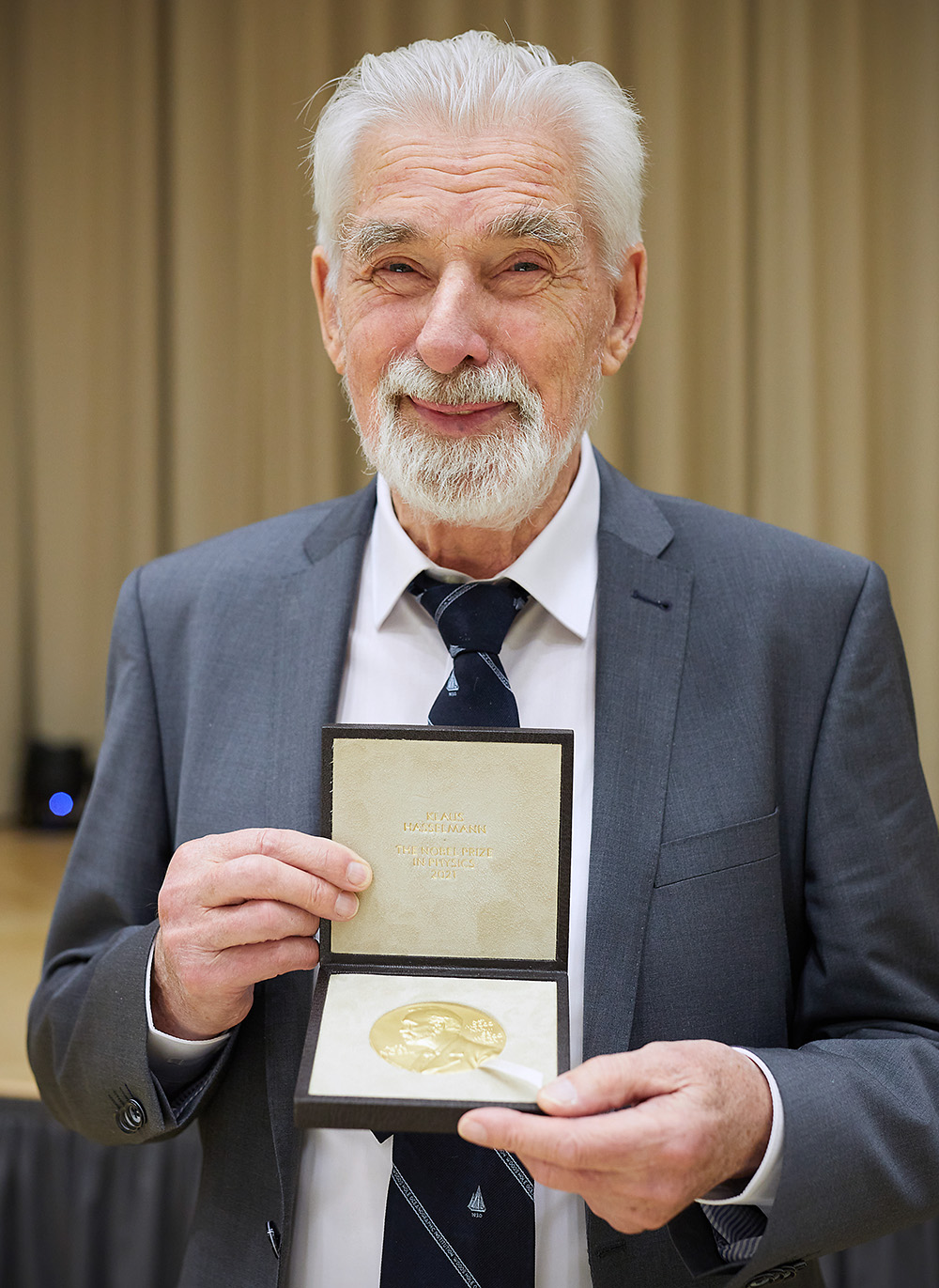
Klaus Hasselmann, founder of the Global Climate Forum
Klaus Hasselmann, founder of GCF and Nobel laureate in Physics 2021.

Our approach

We understand climate change as a wicked problem: there is no single definition of the problem and no simple solution. Four convictions guide our work.

Process matters

A good process that brings together all relevant stakeholders and researchers can work towards solutions. We develop and apply tools for such processes, including decision theatres that combine simulation, visualisation and debate.

Institutions matter

Standard economic theory addresses only part of the problem. We focus on the economic, political and social institutions that enable, hinder and shape the sustainability transition.

Finance matters

Transformations need money. We analyse how states, central banks, public agencies and private finance can mobilise and govern the funds needed for mitigation and adaptation.

Decision support matters

Large uncertainties are no reason for inaction. Robust, adaptive and Bayesian decision approaches can improve choices under deep uncertainty, if they are tailored to the problem.

How we create impact

Transformations are needed at all levels, from local to global. Many fail because of institutional and financial barriers. That is where we work, both top-down and bottom-up.

1
Research

High-level, peer-reviewed research generates new insights and creates legitimacy.

2
Dialogue

In transdisciplinary projects and stakeholder dialogues, decision-makers are involved from the start.

3
Change

Findings reach policy and practice and shift the debate on which options are on the table.

How we are organised

GCF is a scientific cooperative. Our research groups set their own agendas and raise their own funding, while they share the costs of a lean, hands-on support team and contribute to a common agenda.

Adaptation and Social Learning

Creates local impact by involving decision-makers directly in transdisciplinary research, for example on coastal adaptation at the German Baltic Sea and in the Maldives.

Macro-Financial Governance

Creates impact by bringing a new way of thinking about financing decarbonisation and development into academic and policy debates.

Our board

GCF is a registered non-profit association (e.V.) based in Berlin. Board members are elected by the members' assembly for a period of two years; re-election is possible.

Executive Committee
Extended Board of Directors
Prof. Dr. Sarah Wolf
Free University Berlin
Prof. Dr. Diana Mangalagiu
University of Oxford
Dr. Jahel Mielke
Agora Energiewende
Dr. Gesine Steudle
Max Planck Institute of Geoanthropology
Prof. Dr. Manfred Laubichler
Arizona State University
Sebastian Gallehr
GALLEHR+PARTNER

Work with us

GCF is a small, hands-on and non-bureaucratic research environment at the intersection of academia and practice, with flat hierarchies and a fully English-speaking team in central Berlin.

As a process lead

You have secured, or are applying for, a research grant and want to build your own group? GCF offers a liberal research environment, low support contributions so more of your overheads stay with your research, flexibility in hiring and budgeting, and a recognised brand.

As a fellow

Researchers can join GCF as non-resident research fellows for a defined period, or spend a research stay with us in Berlin.

As a researcher

We regularly hire doctoral and postdoctoral researchers and research assistants in our projects and support our PhD students in developing their own grant proposals.

As a member

Institutions and individuals can become members of the GCF association and take part in the members' assembly and our dialogues.

Open positions

Current vacancies and the full job postings are listed on our jobs page.

Get in touch

Please contact our Co-Chairs directly: Jochen Hinkel or Steffen Murau.

Good scientific practice & equality

Two documents set out how we work together: our codex for good scientific practice and our gender equality plan. Both are available as PDF.

Codex for good scientific practice

GCF has adopted a codex that defines our understanding of good scientific practice and sets out clear measures for dealing with scientific misconduct. Gesine Steudle and Sarah Wolf act as ombudspersons. Anyone concerned can contact them confidentially.

PDF
Codex for Good Scientific Practice
PDF · 361 KB
Gender equality plan

We are committed to an inclusive and equitable workplace and a balanced representation of all genders, including non-binary and trans people. Our gender equality plan sets out objectives, targets and concrete workplace policies.

PDF
Gender Equality Plan
PDF · 254 KB
© 2026 Global Climate Forum e.V. All rights reserved.
ImprintPrivacy PolicyContact